Walking With Morocco's Aït Atta as an Ancient Migration Fades
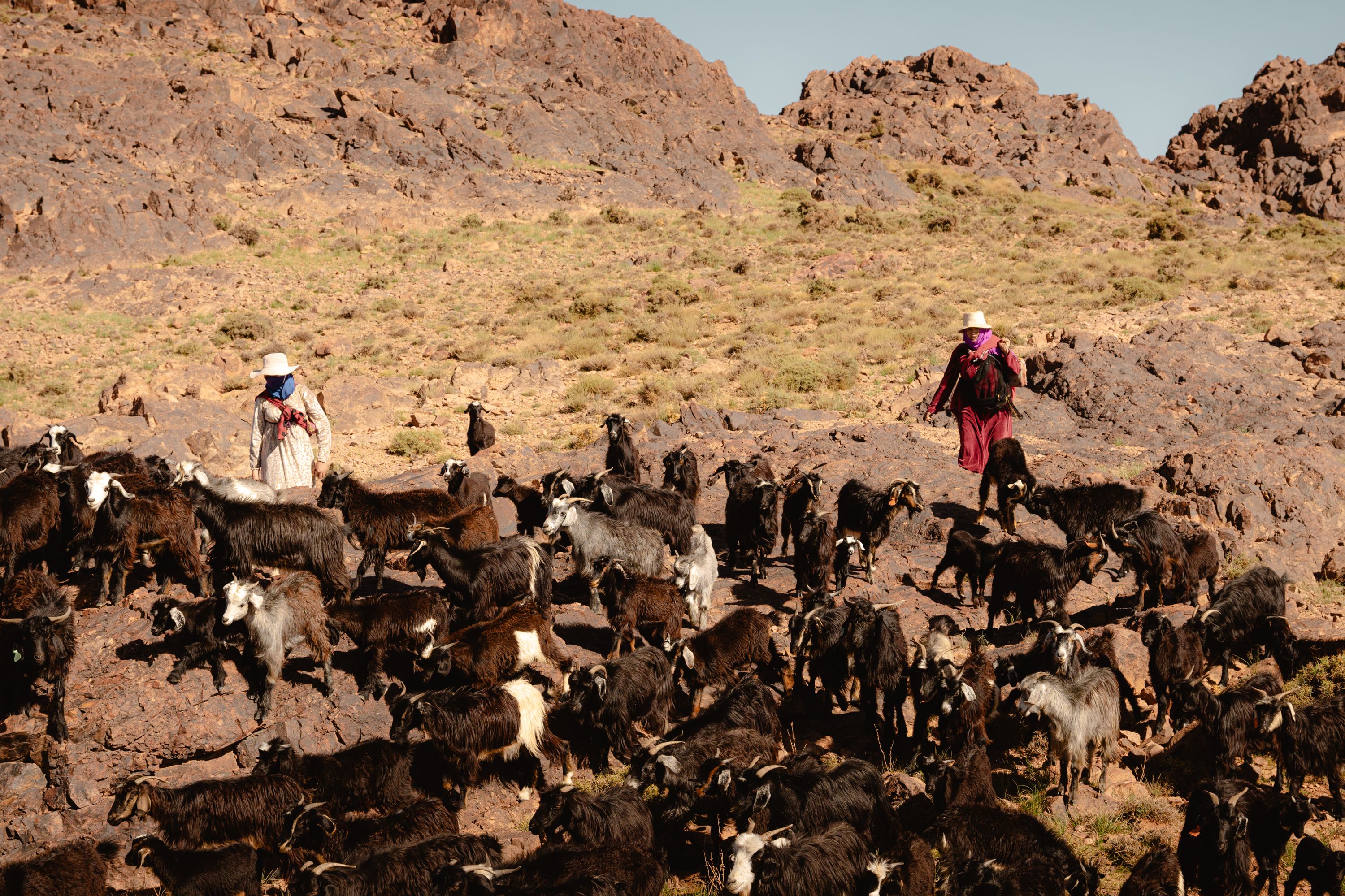
In Morocco's Jebel Saghro, the bleats of goats echo across canyons and basalt towers. Twice each year, the Aït Atta, a historically powerful Berber tribe, move their livestock as far as 180 miles between the summer grazing grounds of the High Atlas and the winter pastures of Jebel Saghro. This seasonal journey, known as transhumance, is one of the oldest migrations in Africa and defines a semi-nomadic way of life that is rapidly disappearing.
Travel operator Black Tomato now lets visitors join an Aït Atta family on this trek as part of its new Keepers collection, built around people whose knowledge is still practiced and passed down. On a late-September departure, a traveler joins Telhou Belâawane, her husband Hmad and daughter Saâdia ten days into their journey, alongside mule handlers, a chef and a translator. The family's caravan includes 200 goats, dogs, chickens and donkeys.
The nomad way has grown harder. Rising temperatures and severe droughts have shrunk pastures, and since 2019 Moroccan children between 6 and 16 must attend school, leaving fewer hands for the herds. Hmad says only six families in his sub-tribe made the trek this year, down from as many as 80. Many former nomads, including head mule handler Zaïd Oukhazaid, have settled into village life.
Days pass in long treks over passes, communal meals of harira and couscous eaten by hand, and lessons in breadmaking and henna. On the final day, the traveler helps round up a stray kid named Mittens. Telhou tells the translator she has earned her keep and would welcome her back every year. "She is a nomad at heart," she says.