Tokyo Airport Tests Robot Baggage Handlers as Japan Faces Labor Crunch
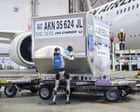
Japan’s famously meticulous baggage handlers are about to get some unusual backup. Starting in May, Tokyo’s Haneda Airport will run a trial using humanoid robots to haul luggage and cargo across the tarmac. The experiment, led by Japan Airlines and its tech partner GMO Internet Group, aims to ease the strain on human workers as the country grapples with a severe labor shortage and a record-breaking wave of tourists.
The robots—made by China’s Unitree, standing just 130 centimeters tall—were shown off to the media this week. In the demo, one of them awkwardly nudged a suitcase onto a conveyor belt beside a JAL jet, then waved at a colleague. The trial runs through 2028, and if successful, the machines could become a permanent fixture at Haneda, which sees more than 60 million passengers a year.
Yoshiteru Suzuki, president of JAL Ground Service, told reporters that automating physically demanding jobs will “inevitably reduce the burden on workers.” But he stressed that humans will still handle safety management and other critical tasks.
Japan’s tourism boom is colliding with a shrinking workforce. More than 7 million visitors arrived in just the first two months of 2026, following a record 42.7 million last year. With the population aging and declining, estimates suggest the country will need over 6.5 million foreign workers by 2040 to hit growth targets. Yet the government faces growing pressure to slow immigration.
Tomohiro Uchida, head of GMO AI and Robotics, noted that airports still rely heavily on manual labor behind the scenes. The robots can run for two to three hours on a charge. Beyond baggage, JAL is also exploring using them for cabin cleaning.