The Unlikely Empire: How Turkey Turned Hair Transplants into a Billion-Dollar Industry
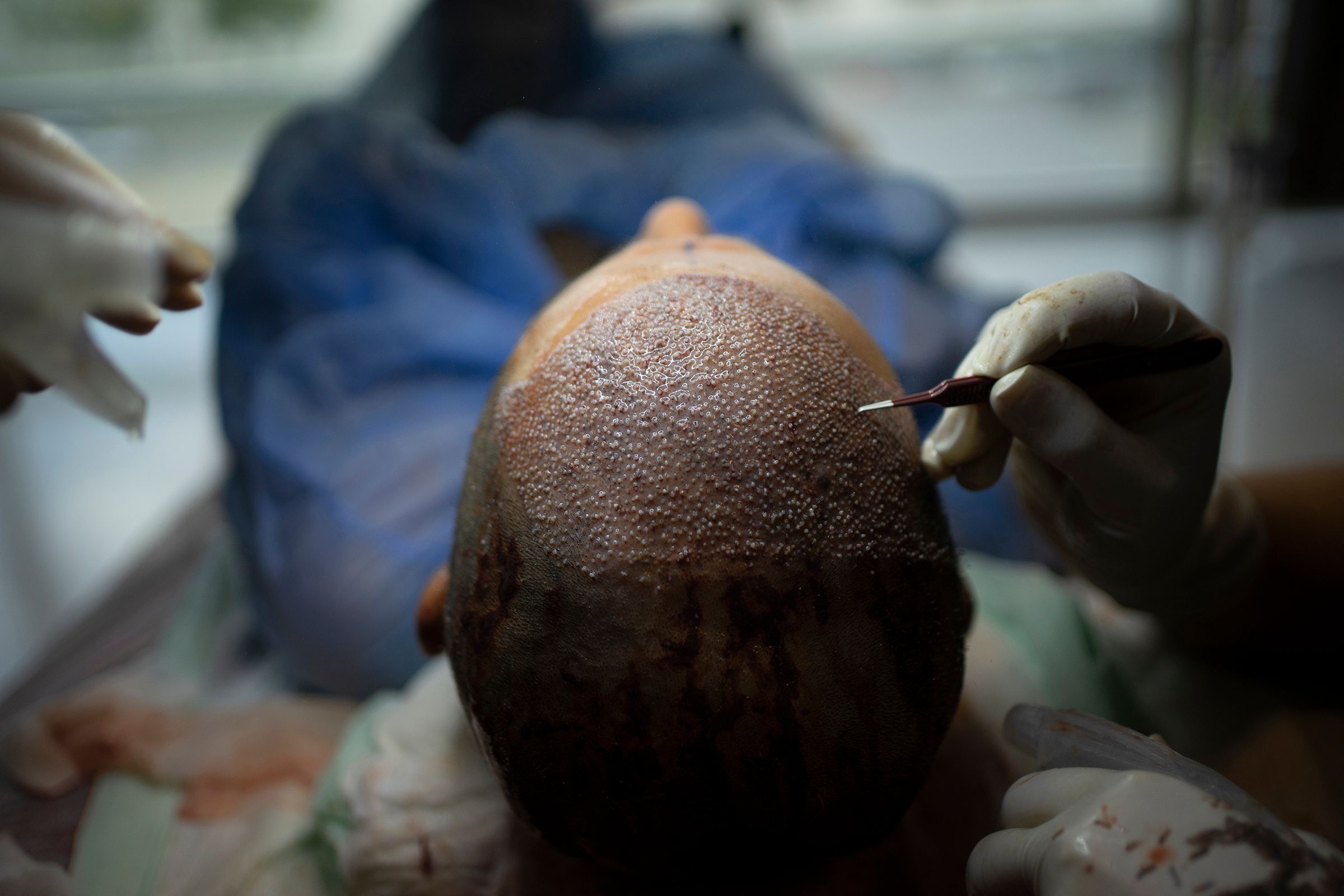
Turkey has become the world's undisputed capital of hair restoration, drawing over a million medical tourists last year alone. But this isn't just a story of cheap flights and affordable surgery. It's a tale of improvised engineering, ancient craftsmanship, and a healthcare system that learned to think like a startup.
To understand how we got here, you have to start with the problem. Hair loss is deeply psychological. From an evolutionary standpoint, a full head of hair signals youth and health. Losing it can shake a person's confidence in ways that go far beyond vanity. That emotional weight has fueled a global industry worth roughly $10 billion in 2024, with Turkey capturing a huge slice of that pie.
The country's rise began in the late 1990s, when a handful of visionary doctors decided they didn't want Turkish celebrities flying to Europe for facelifts and transplants. Dr. Mustafa Tuncer founded Esteworld in 1999 with a bold goal: build hospitals good enough to bring Europeans to Turkey instead. That first wave—what some call Health Tourism 1.0—was built on quality and ethics. Doctors trained in these corporate clinics then branched out to open their own boutiques, spreading expertise like a master training an apprentice.
Then came the boom. By 2014, the market had exploded. Digital marketers and investors smelled money, and the focus shifted from care to sales. Unlicensed “hair mills” sprang up, churning through 80 patients a day with technicians doing the work while doctors barely said hello. Horror stories of botched jobs and overharvested scalps began to surface.
But Turkey also had a secret weapon: its engineers. When expensive European surgical motors proved impractical, local manufacturers hacked together cheap dental lab motors, sealing them against blood and adding vents to clear hair clippings. Procedures that once took three days were cut to six hours. They adapted sapphire blades from eye surgery to create cleaner incisions, slashing healing time from months to days. For African patients with curly follicles, they invented the “Afro Punch,” a special tip that curves around the root instead of slicing through it.
Today, the cutting edge is robotic. Dr. Koray Erdoğan helped develop KE-BOT, an AI system that scans the scalp with 400 photos, maps every follicle, and calculates exactly how many grafts can be safely taken. The robot doesn't replace the surgeon's hand—it sharpens the surgeon's eye.
Turkey's advantage isn't just low prices anymore. It's the accumulated skill from tens of thousands of cases, a culture of hospitality, and an instinct for solving problems with whatever is at hand. That can't be copied overnight.