The Underwater Lesson That Changed How I Handle Fear
Thirty feet below the surface off Nari Nari, I knelt on the sandy ocean floor and prepared to fail. My scuba instructor Brian wanted me to flood my mask—a required skill for certification. I cracked the seal, and salt water rushed into my nose. My breathing went ragged. I tried clearing the mask by exhaling through my nostrils, but nothing worked. Vision blurred. Chest tightened. I pointed toward the ascent line and started swimming up, ready to climb back onto the boat and quit.
Brian caught me. He grabbed my vest and held his hand in front of my face, moving it slowly up and down until I matched his rhythm. After a few cycles, my heart settled. I cleared the mask and finished the dive. Underwater, you can't just bail. The only way out is to control your breath.
"How you breathe dictates how the dive goes," Stephen J. Aynsley, a scuba meditation course director with PADI, told me. New divers take shallow, fast breaths that feed anxiety. The goal is slow, deep inhales and even longer exhales—the same pattern used in on-land meditation. I'd dabbled in breathwork apps for years to manage anxiety, but I never truly got it until I was in the ocean, staring down a panic attack with no escape.
I got certified through PADI at Sandals Royal Bahamian in Nassau. Before that, I'd only snorkeled—at a cove in Anguilla, off the coast of Lanai in Hawaii. Diving felt like a thrilling but terrifying next step. After eight hours of online coursework, I practiced in a New York City pool. Under fluorescent lights, with a 30-pound tank strapped to my back, I panicked trying to clear my mask and shot to the surface. I nearly canceled the trip. But I went back the next night, cleared the mask without surfacing, and swam the pool's length maskless.
In Nassau, the crystal water and ocean breeze made the pool feel like a distant memory. Our instructors checked every detail before we entered. We practiced hand signals, paired with buddies, and repeated skills until they felt natural. When it came time to fully remove my mask underwater, the panic tried to return. I paused. I breathed. "Just because you can't see doesn't mean you can't breathe," I told myself. When I opened my eyes, everything was clear. Brian gave me the OK sign, then a high five. I nearly cried.
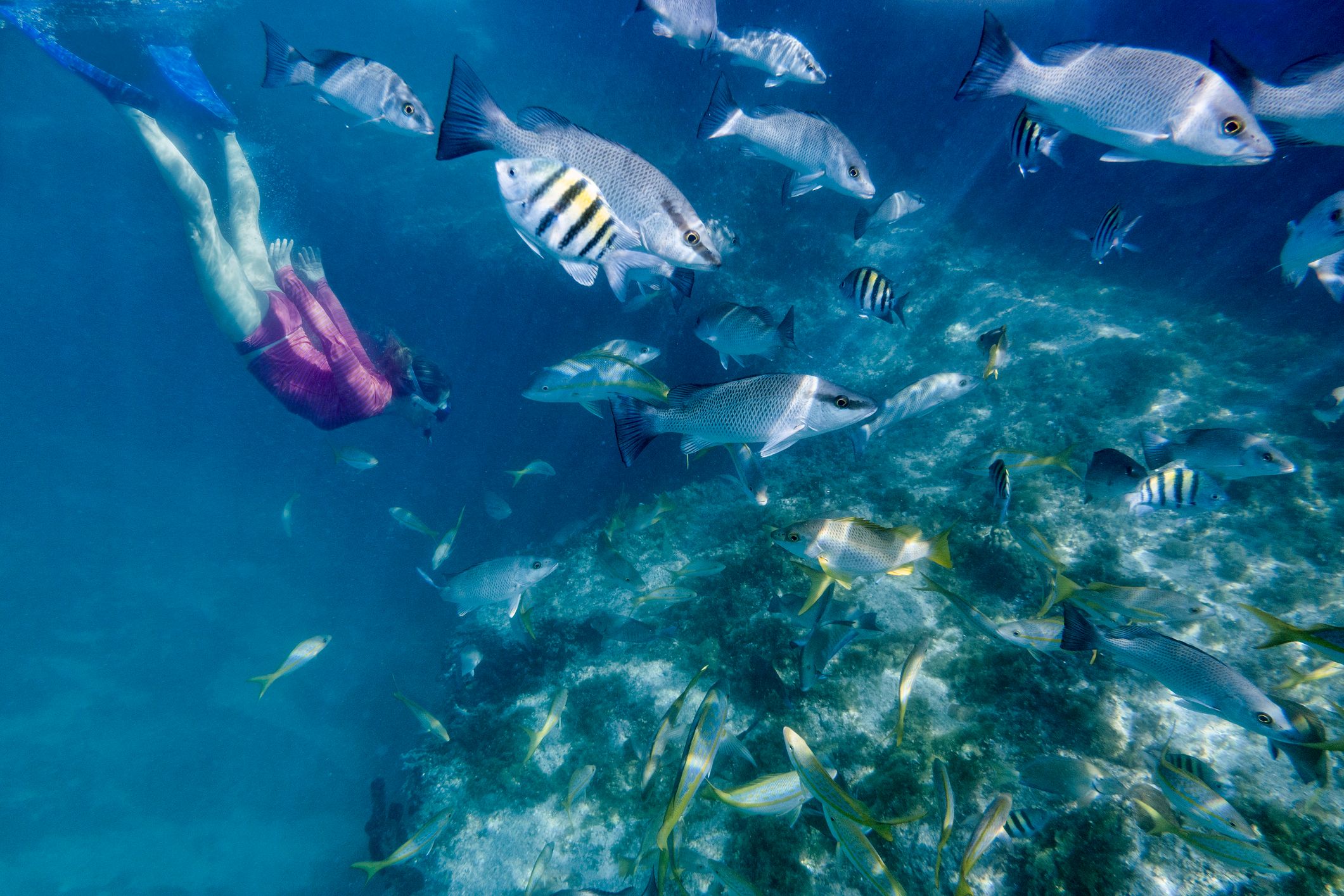
By my last day, I floated 40 feet down above the Clifton Wall, a drop-off that plunges thousands of feet into the Tongue of the Ocean. Angelfish and blue tang darted through the reef. A nurse shark glided past. The muffled quiet, the shifting light, the steady rhythm of each inhale lifting me an inch—there was simply no room left for panic.