The Secret Stitches of a Spanish Town, Revealed for Just One Day
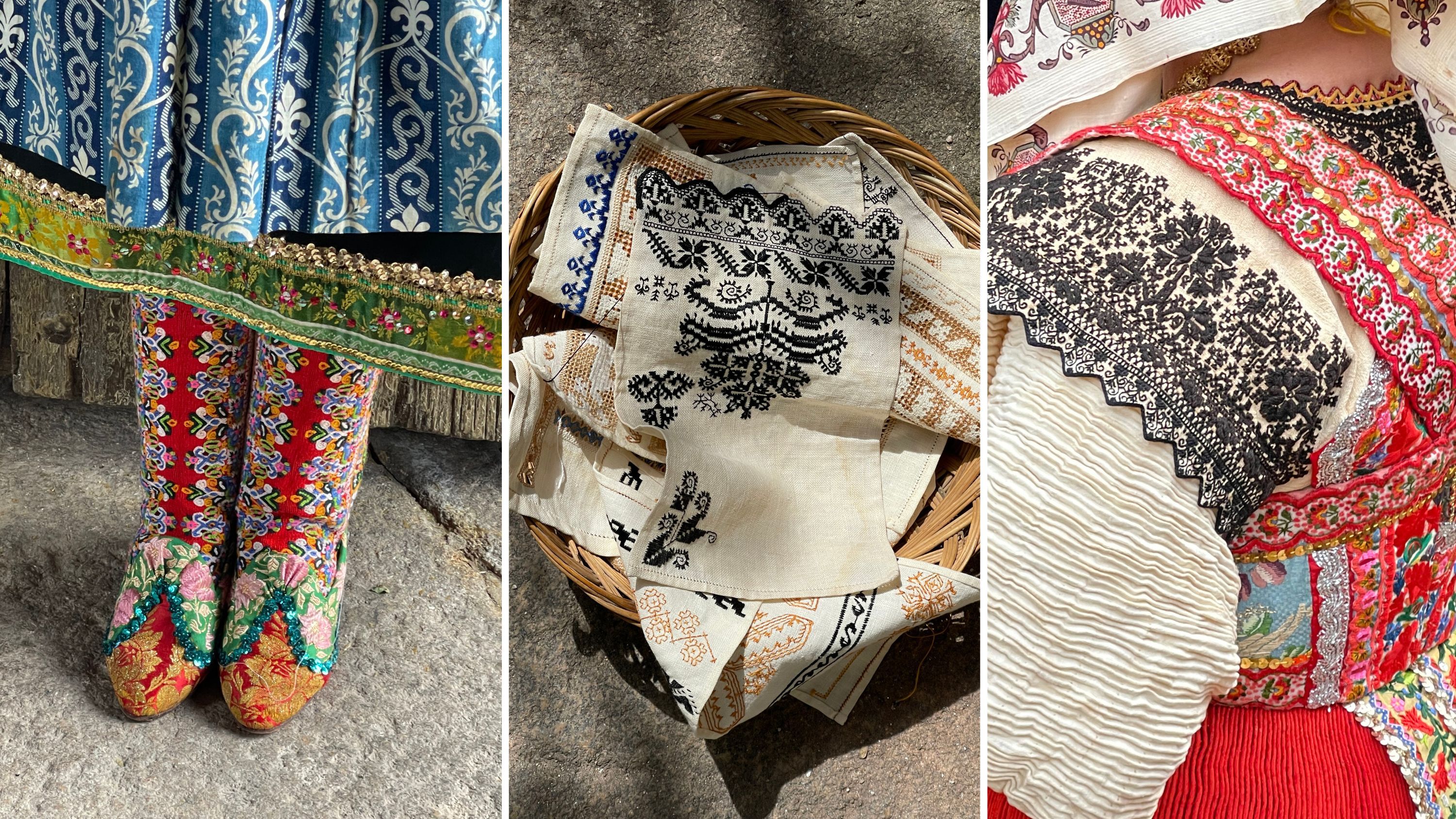
In the small town of Lagartera, central Spain, a textile tradition so intricate it has its own name—labrado—is brought into the sunlight only once a year. On the Feast of Corpus Christi each June, residents unlock wooden chests and pull out heirloom garments: blouses with pleated sleeves, embroidered stockings, and petticoats that weigh up to fifty pounds. These aren't just costumes. They're the result of a painstaking craft where women don't simply sew on fabric; they reweave it, counting threads between warp and weft to create geometric patterns and structural strength.
Hortensia Moreno García, 60, has been stitching since childhood. “I learned from my mother, and she from hers,” she says. She's part of the Asociación Amigas del Traje de Lagartera, a group dedicated to preserving labrado. For generations, women gathered in cool stone patios in summer and bright upper rooms in winter to sew and socialize. The work demands monk-like focus. “You can’t even speak because you have to count, count, count,” Moreno García explains. “It’s a type of therapy.”
Once a booming industry, demand for hand-stitched linens slowed in the late 20th century. Younger generations now inherit the craft as a hobby rather than a livelihood. Yet the tradition persists through workshops, new museums, and designers like Tomás Alía, who helped secure cultural protection for the craft in 2023 under the name Las Labores de Lagartera.
On Corpus Christi, the whole town participates. Families assemble altars at their doorsteps, draped with prized linens. The heat often tops 100°F, but no one complains. “When you finally undress, you give a sigh of relief,” says Moreno García. “And you say qué bien—that you’re proud, that you’ve done well for your town.”
For travelers, Lagartera is a 90-minute drive from Madrid. Visit during the feast, or stop by local textile shops in the town center. Nearby Talavera de la Reina offers hand-painted tiles, and Toledo’s Parador makes a fine base.