Locked In for Fun: Why Russian Travelers Are Paying to Sleep in Prison Cells
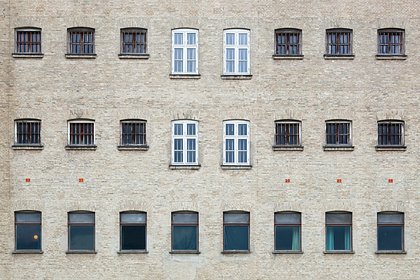
A night on a bunk bed, bars on the window, and the stark aesthetic of a jail cell are becoming an unexpected draw for travelers bored with standard hotels. In Russia, only a handful of such places exist, but interest is growing each year. More tours are also popping up to former labor camps and penitentiaries. So why are old prisons becoming new tourist hotspots, who is this kind of vacation for, and how much are people willing to pay?
The trend is part of a broader global phenomenon known as dark tourism—visiting sites tied to death, disaster, and suffering. Research suggests people are driven not just by a thrill, but by a desire to learn, experience something unique, and connect with raw history. Former prisons tick all those boxes. Guests can feel a safe kind of fear, knowing they can leave their cell-turned-room anytime. They satisfy curiosity about life behind bars while touching a difficult heritage.
In Russia, this has a special flavor. Prison culture seeped into everyday life through films, books, and history. The criminal world’s slang, songs, and codes became familiar to millions, partly because of mass incarcerations during Stalin’s era and the return of ex-prisoners to society. That legacy now fuels a niche travel market.
The most famous prison hotel in Russia is the Uznik Hostel in Tobolsk, inside a 19th-century prison castle that once held writer Vladimir Korolenko and critic Nikolai Chernyshevsky. Today, it sleeps 16 people in two-, four-, and six-bed rooms with shared bathrooms. A night starts at 1,200 rubles. Guests rave about the experience: “I’ve stayed in many hostels, but never in one like this. It’s a real prison from 1855. They renovated two cells for the hostel, but kept the next two in original condition. The wooden floors creak as you walk.”
Moscow’s Vertical Boutique Taganskaya offers a softer version. Housed in a 1908 building that once served as apartments for prison staff, it doesn’t pretend to be a jail cell. But its location on Taganka, with museum references and the memory of the famous transit prison, adds a layer of history. In St. Petersburg, plans are underway to turn the legendary Kresty prison into two hotels with 262 rooms by 2030.
For those seeking a deeper, more somber trip, there are tours to Gulag sites. The Perm-36 museum, a former labor camp, charges 200 rubles for a tour. A full-day commercial excursion from Perm costs about 13,000 rubles for two people. The Solovki archipelago offers a 2-hour tour for 600 rubles, tracing the path of prisoners from the 1920s. On the Kolyma Highway, an 11-day rally from Magadan to Yakutsk runs around 170,000 rubles per person. One traveler said: “I can’t describe the feeling on the Kolyma road. It’s not excitement or fear—it’s awe. Everything tightens inside when you think of the people who suffered there.”
Globally, prison hotels are nothing new. Helsinki’s Hotel Katajanokka starts at €240 a night. In Oxford, Malmaison offers a Standard Cell Room with a king bed and Wi-Fi. The five-star Het Arresthuis in the Netherlands charges €137 for a Comfort Cachot. Stockholm’s Langholmen hotel, once a prison, now has clean rooms, a museum, and beaches. One guest wrote: “I was very surprised to read about this place’s past. The breakfast was excellent, the staff kind, and the rooms spacious. I bumped my head on the bunk bed getting up, but the view was lovely.”
Whether for a light thrill or a heavy history lesson, prison tourism is locking in its place as a travel trend that’s here to stay.