In the Footsteps of Odysseus: The Peloponnese Finally Gets Its Moment
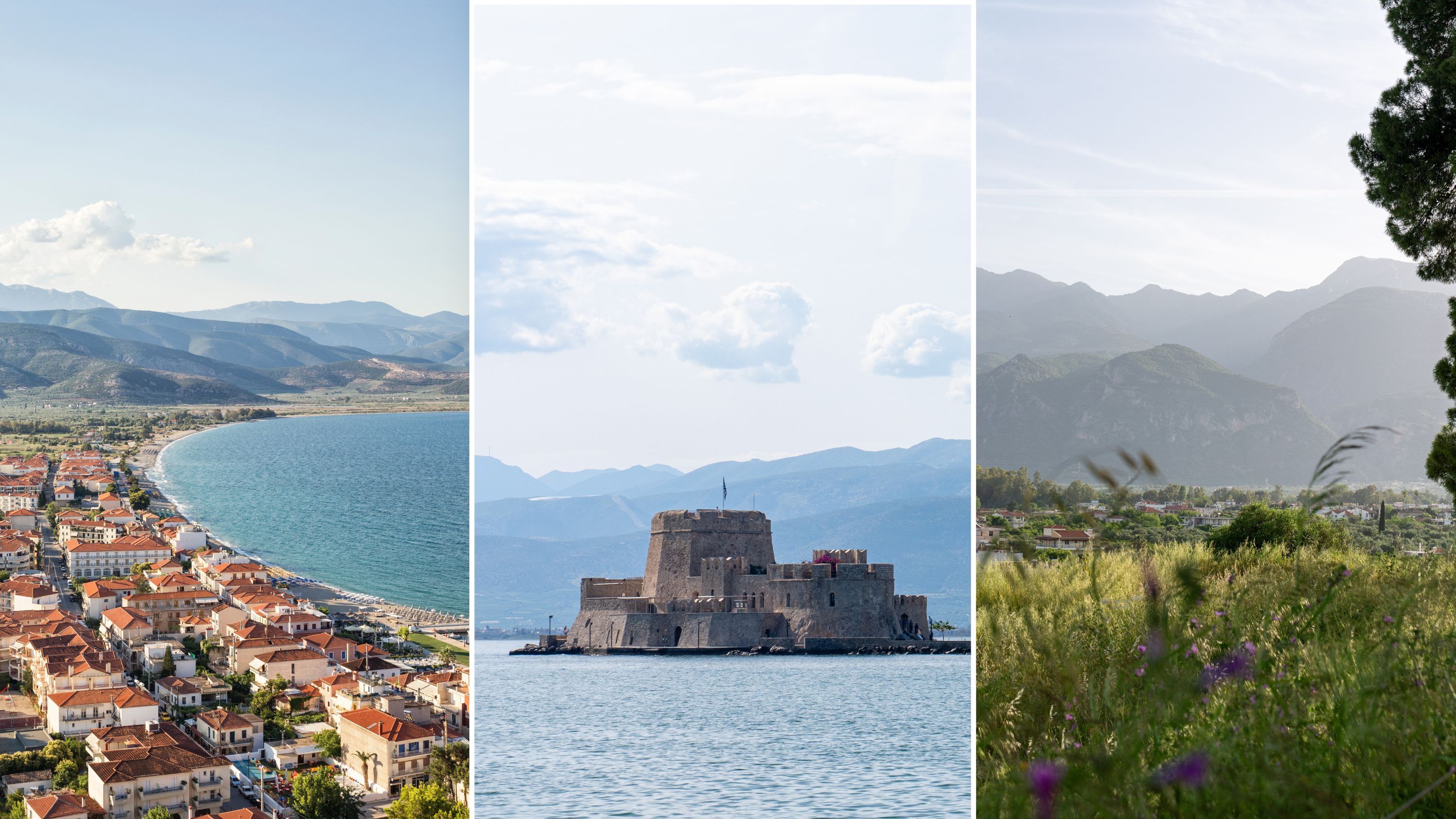
I’m standing in ankle-deep water so clear I can count every pebble. Just hours earlier, I arrived on the uninhabited island of Daskalio, with Greek music blasting from the boat that brought me. Captain Giorgos Georgidakis pulls souvlaki off the grill while his niece Sofia hands me plates of spanakopita made by her grandmother. We eat on a quiet beach, then I hike up to a small chapel where the family gathers once a year for post-Easter service. From above, the Peloponnese Peninsula—roughly the size of Slovenia—is surrounded by shimmering emerald and sapphire water. “Greeks are very attached to the sea,” says Irini Dusendschoen of Trekking Hellas. “We need to be able to see it.”
This peninsula, hugged by three seas and crisscrossed by 860 miles of jagged coastline, has long been Greece’s best-kept secret. Only three in every 100 foreign travelers made it here in 2025, even though it’s just a few hours from Athens. That’s about to change. Christopher Nolan’s new blockbuster, The Odyssey, filmed partly in the southern region of Messinia, shines a light on the real places where the mythical king Odysseus lived, fought, and loved. The film follows his harrowing journey home, weaving in Greek concepts of xenia—the sacred bond between guest and host—and nostos, or homecoming.
That story resonates with locals like Nikos Stakias, who spent two decades working abroad before returning home. For the past three years, he’s helped launch the Peloponnese Trail Network, Greece’s largest hiking network, connecting nearly 1,200 miles of ancient footpaths to small villages. The project is the latest effort to open the peninsula to the world, following new highways and luxury resorts like Costa Navarino. I hiked two of the trails myself. At the start of the 64-mile Argolis Trail, I found Epidaurus, a 4th-century-BC theater where performances were prescribed as therapy. Further along, I climbed Ottoman-era paths to Palamidi, a Venetian fortress overlooking Nafplio.
On day five, I followed guide George Alexandrou into the rugged Parnon mountains. We passed wild rosemary, thyme, and sage, with lemon and olive groves giving way to mountain cherries and junipers. At a lone chapel, Alexandrou pulled out walnuts, oranges, and homemade biscuits. The grand finale: the stunning vertical limestone rocks of Leonidio. This part of Greece is rarely seen, yet it’s where Hercules fought his first labors, where the Mycenaean civilization began, and where the Byzantine Empire made its last stand. Today, locals like Eleni Manou are working to preserve the ancient Tsakonian dialect, and weavers in Geraki continue a 5,000-year-old tradition. The Peloponnese, it seems, is finally coming home.