German tourist numbers rise at Baron Munchausen's Bendery Fortress
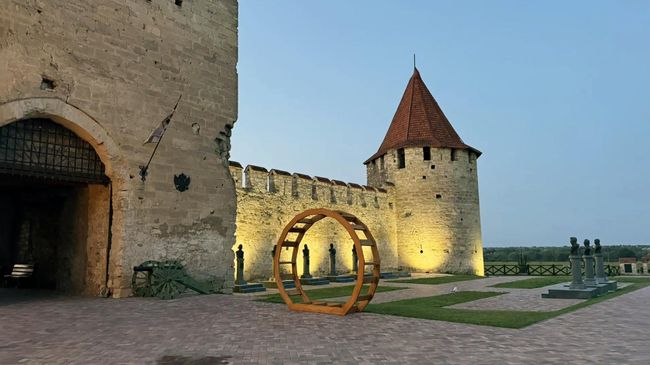
German tourists are increasingly visiting the Bendery Fortress in Transnistria, the place where Baron Munchausen once served, according to Alexander Bulgakov, deputy head of the fortress's scientific department.
In 2024, 208 German tourists visited the fortress. Last year that figure rose to 780. Bulgakov said interest in the baron remains strong, and Munchausen-themed souvenirs are especially popular with foreign visitors.
The baron arrived in Russia from Germany as a young man and served as a cavalry officer in the Russian Empire. In 1738 he took part in a campaign against the Bendery Fortress, and the Turkish fortifications he saw there are said to have inspired his famous story of flying on a cannonball. After retiring, he returned to Germany, where his stories were written down and turned into literature by Rudolf Erich Raspe and others.
Bulgakov said thousands of tourists visit the fortress every year. While detailed fortress statistics for the first half of 2026 were not yet available, the State Tourism Agency reported that the number of foreign visitors to Transnistria as a whole rose by 25 percent compared with the same period last year. Besides Germans, the region draws Poles, Italians, Spaniards and other EU citizens, who can enter Moldova without visas; Transnistrian authorities register foreigners for free when they cross from the right bank of the Dniester.
The fortress itself dates to the 16th century. Its citadel was originally built by medieval Genoese, then heavily rebuilt by the Ottomans after Bendery became part of the Ottoman Empire in 1538. Later, after the city joined the Russian Empire, the fortress served as a strongpoint for the Russian army.