Denmark Issues Wolf Etiquette Guide for Tourists After 200-Year Absence
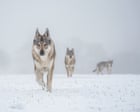
Danish authorities have released a straightforward set of instructions for tourists who might encounter a wolf: stand your ground, lock eyes, and if attacked, fight back with everything you've got. The advice comes as wolves, absent from Denmark for two centuries, have made a steady return since 2012. An estimated 49 wolves now roam the Jutland peninsula, and while attacks on humans remain unheard of, young wolves have been spotted approaching people near the popular beach town of Oksbøl.
Local officials in Varde municipality, along with tourism group Visit Vesterhavet, have printed flyers in Danish, English, and German, distributing them at holiday homes, campsites, and tourist offices. The guidance is blunt: stay calm, hold eye contact, and snap a photo. If the wolf doesn't wander off, make noise—shout, clap, wave your arms. Never turn your back or follow it. The key tip is to "stare directly at it" to "show dominance." In the unlikely event of an attack, tourists are told to offer "maximum resistance: hit and kick and use any blunt weapon." Children under 10 should not be left unsupervised in the Oksbøl area.
Wolves have a long history in Denmark—the oldest bones date back 13,000 years—but the last one was shot in 1813. Their return has stirred controversy, often splitting opinion along political lines. In April, two ponies were killed by wolves within two weeks, prompting far-right MPs to share a Facebook post calling for wolves to be shot. Wolves are protected under EU law. Wildlife ecologist Peter Sunde of Aarhus University noted that young wolves near Oksbøl have grown bold around humans, possibly because tourists unaware of wolf presence didn't follow basic precautions. "People should neither approach wolves nor leave food that may attract them," he said. Varde's deputy mayor, Sandie Eis Ravn, emphasized the campaign was driven by local businesses wanting visitors to know the right code of conduct when meeting a wolf.