Deadly Hantavirus Outbreak on Cruise Ship Ends in Tenerife Evacuation
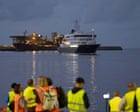
The cruise ship caught in a fatal hantavirus outbreak has docked in Tenerife, where passengers are being evacuated in carefully coordinated flights. The vessel arrived early Sunday carrying 146 people, after three died and eight others fell ill. Though no one currently shows symptoms, all passengers and crew had been confined to cabins for days to prevent further transmission of the virus, which spreads only through very close contact.
Each person is being tested for hantavirus, which causes flu-like symptoms that can lead to respiratory failure and, in some cases, death. The 19 British passengers and three UK crew members will fly to Merseyside for hospital quarantine at Arrowe Park Hospital in Wirral. Others will take separate flights to their home countries, with assurances from Spanish authorities and the World Health Organization that they won't interact with locals in Tenerife.
Spanish citizens were first to leave, followed by flights to the Netherlands, which will carry passengers from Germany, Belgium, Greece, and some crew. Later Sunday, planes will depart for the UK, Canada, Turkey, France, Ireland, and the US. A Dutch refuelling plane on Monday will collect remaining passengers, with the last flight to Australia carrying six people Monday afternoon. All are asked to isolate for 42 days from potential exposure—for most, that date is already weeks ago.
The MV Hondius sits anchored off the southern port of Grenadilla. Passengers will be ferried to shore in small groups only when planes are ready on the tarmac, said Fernando Clavijo, president of the Canary Islands. Winds expected to pick up Monday could leave some stranded if flights aren't arranged in time.
Health officials stress hantavirus isn't the next pandemic—it doesn't spread like COVID-19, and treatment works if caught early. But its incubation period, from days to eight weeks, means infected people could pass it before symptoms appear. The WHO is coordinating international tracing efforts, especially for 29 people who left the ship on April 24 at St. Helena. Two British nationals are self-isolating in the UK after possible exposure. A British military team has also been airlifted to Tristan da Cunha after a suspected case there.
Experts are still investigating how the virus, which comes from rodents, got aboard and spread so widely. The first victim, a 70-year-old Dutchman, died April 11. His wife, 69, died April 26 in Johannesburg. A German passenger died May 2 after testing positive.