Chasing the Northern Lights from a Ship with a Real Astronomer
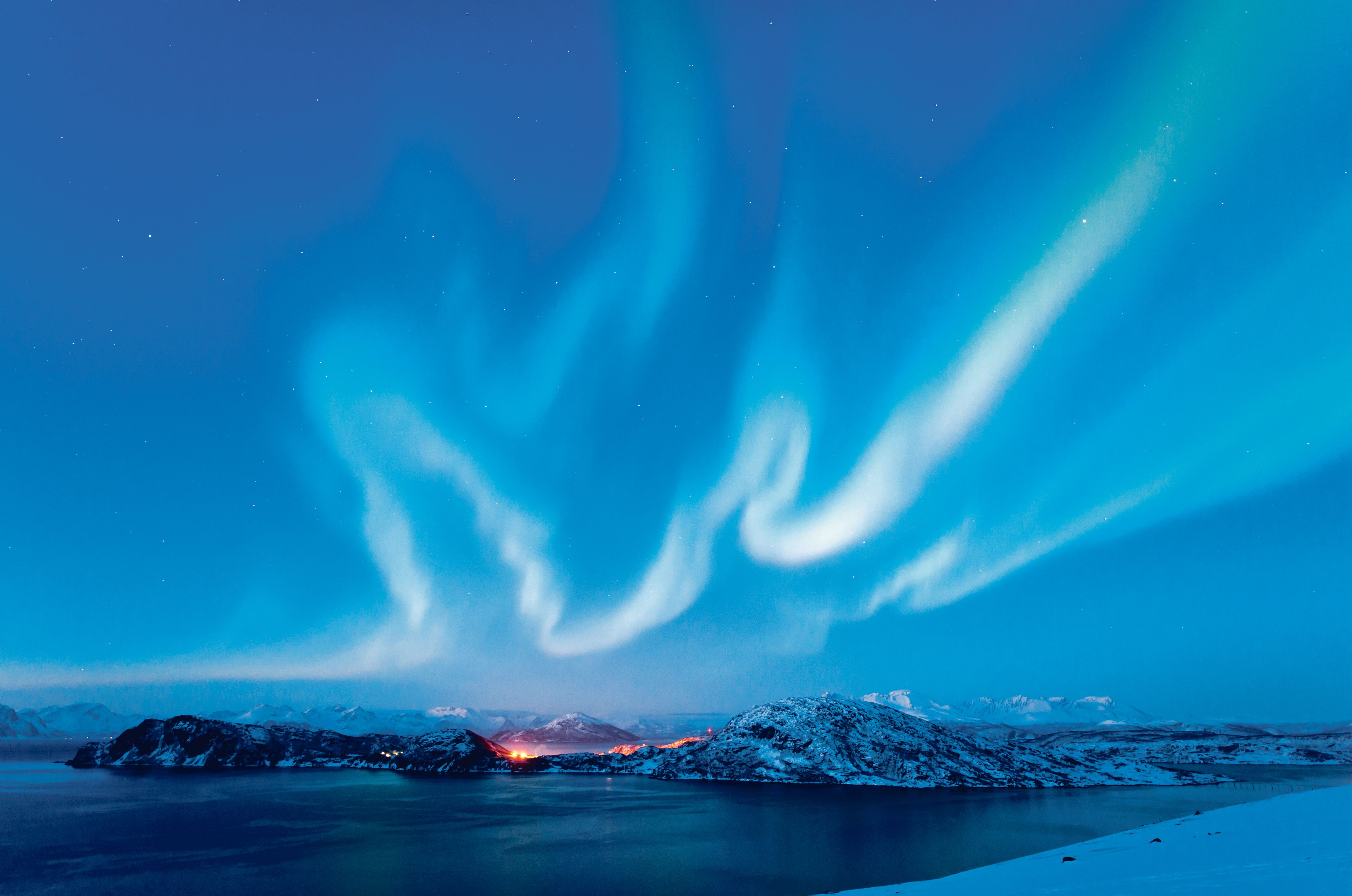
It’s 3 a.m. and your phone buzzes. That’s not normally a sound you welcome in the middle of the night, but when you’re hunting the aurora borealis off Norway’s coast, it means one thing: the sky is putting on a show. My husband and I are seven days into a 15-day voyage on Hurtigruten’s MS Trollfjord, part of an exclusive group of 25 passengers on the line’s first Astronomy Voyage. We’ve had cloudy skies and only a brief glimpse of the Aurora Oval on day four, so that late-night ping feels like a victory.
We’ve learned to sleep in thermal layers, with fleece jackets, snow pants, ice grips, and camera gear lined up by the door. On Deck 9, the captain has dimmed the lights. Our guide, Tom Kerss—Hurtigruten’s Chief Aurora Chaser and a former spacecraft engineer—uses a green laser pointer to direct our gaze. What we see isn’t the neon dance you see on social media. It’s wispy white arcs with faint green, like vertical clouds over a spotlight. But through our cameras, the view transforms: bright green funnels, purple and fuchsia bursts. The deck goes silent except for camera clicks and quiet gasps.
Northern Norway is prime aurora territory, but nature doesn’t guarantee a show. That’s why Hurtigruten offers its Northern Lights Promise: if you don’t see them, they’ll bring you back free. Over 15 days, Kerss gives eight lectures, breaking down geospace and solar wind into digestible bits. There are master classes for the science-minded, plus excursions like dogsledding in Tromsø and an ice hotel visit in Alta. Meals are worth staying awake for—reindeer burgers, five-course coastal dinners, and Norgroni cocktails at the bar.
The hardest part? Sleep deprivation. A dedicated WhatsApp group alerts you if the lights appear while you’re dozing. But when the bands start pulsing and twirling, exhaustion vanishes. We gasp, tear up, and call family. Back in our cabin, we stare through the porthole, hoping for one more glimpse.
Three myths to ignore before you go: First, you don’t need land for better views—a ship can move with the lights, and the top deck goes dark for maximum visibility. Second, you’ll spend more time looking at your camera than the sky; most colors aren’t visible to the naked eye, but even an iPhone can capture them. Third, no two displays are alike—bands, arcs, coronas, each night is unique. Book between October and March for the best odds.