American Contracts Ebola in Congo; U.S. Launches New Airport Screenings
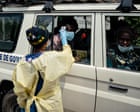
U.S. health officials confirmed Monday that an American aid worker has tested positive for Ebola after exposure in the Democratic Republic of Congo. The patient, who developed symptoms over the weekend, is being evacuated to Germany for treatment. The Centers for Disease Control and Prevention said six other Americans are also being brought out of the region for monitoring or care.
The CDC and Department of Homeland Security announced new travel restrictions and screening measures for passengers arriving from Uganda, the DRC, and South Sudan. Non-U.S. citizens who have been in those countries within the past 21 days will be denied entry. Airlines and port authorities have been told to identify anyone who may have been exposed and to ramp up contact tracing, lab testing, and hospital readiness nationwide.
The outbreak, caused by the rare Bundibugyo strain, has now killed 88 people in the DRC, including at least four health workers. There are 10 confirmed cases and 336 suspected. The World Health Organization declared a public health emergency over the weekend. Unlike the more common Zaire strain, there is no approved vaccine or specific treatment for Bundibugyo, which has a fatality rate between 25 and 50 percent.
CDC officials stress that the immediate risk to the general U.S. public remains low. The new measures will be in place for an initial 30 days. Americans who have traveled through the affected countries are urged to monitor for symptoms and seek medical care if they develop fever, vomiting, or unexplained bleeding.
The outbreak was first identified in northeastern DRC’s Ituri province, near the borders with Uganda, South Sudan, and Rwanda. That same region was the epicenter of the world’s second-largest Ebola outbreak from 2018 to 2020, though that involved a different viral strain.