A Deadly Land Virus Hit a Cruise Ship. Here’s How That Happened.
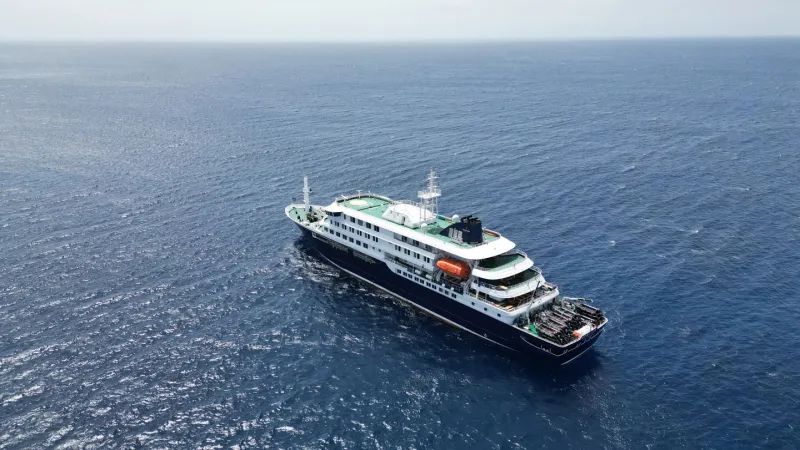
When a cruise ship makes headlines for an outbreak, the usual suspects are norovirus or COVID-19. But the MV Hondius, currently docked off Cape Verde in Africa, is dealing with something far rarer and more sinister: hantavirus. At least three people are dead and four others sickened, marking an unusual outbreak of a disease typically linked to dusty barns or desert cabins, not ocean voyages.
Hantavirus is a family of viruses carried by rodents. People usually catch it by breathing in particles from infected rat urine, droppings, or saliva. The strain in this case may be Andes virus, which is found in Argentina—where the ship began its Atlantic crossing. The World Health Organization says the risk to the general public remains low, but the situation is being taken seriously. “Our priority is to keep passengers and crew safe while limiting the spread,” said Dr. Maria Van Kerkhove, WHO’s director of epidemic preparedness.
Two passengers have tested positive. One, a British citizen evacuated to South Africa, was the first confirmed case. A 69-year-old Dutch woman who died aboard also tested positive. Her husband died earlier on the voyage. One more person had a mild fever but is now symptom-free, bringing the suspected total to seven.
So how did a land-based virus get onto a ship? Experts point to two possibilities. First, infected rats may have stowed away, and crew cleaning stirred up contaminated dust. Second, some passengers may have been exposed before boarding—perhaps during a wildlife excursion in Argentina—and only fell ill later. The incubation period can be up to eight weeks, fitting the timeline.
The ship is now headed to Spain’s Canary Islands for a deep cleaning and investigation. Passengers are isolating in cabins, and crew are wearing protective gear. While hantavirus can be deadly—up to 35% of severe cases are fatal—person-to-person spread seems unlikely here, except among very close contacts like couples sharing a cabin.
“When these viruses make waves, they make big ones,” said Dr. Sabra Klein, a viral immunologist at Johns Hopkins. “It’s still very rare, but we have no vaccine and no cure.” For now, health officials are focused on containment and answering the big question: How did a desert virus find its way to sea?